

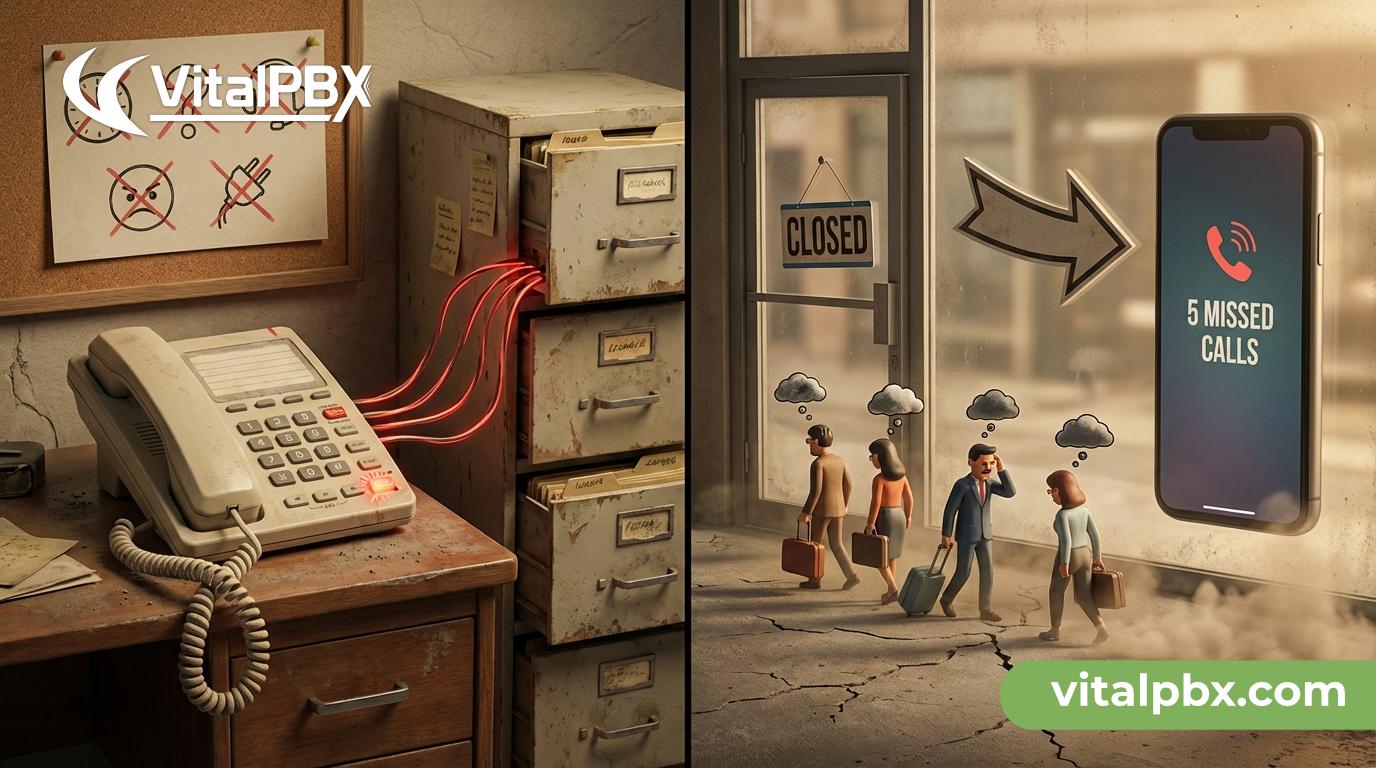
Is your outdated phone system quietly driving customers away? In 2026, customer expectations are higher than ever. People want instant answers, seamless transfers, and professional interactions every single time they call. If your business is still relying on a legacy phone system, you may be creating friction points that are costing you customers — and revenue — without even realizing it.
The good news? Understanding the problem is the first step toward fixing it. In this article, we break down the five most common ways an old phone system is frustrating your customers, and what you can do about it right now.
1. Endless Hold Times and Poor Call Routing Are Killing Customer Patience
Nothing frustrates a caller faster than being stuck on hold for minutes — only to be transferred to the wrong department and put on hold again. Legacy phone systems rely on outdated, rigid call routing logic that simply cannot keep up with modern business demands.
Why Old PBX Systems Struggle with Call Management
Traditional phone systems were designed for a different era. They lack intelligent call distribution features like:
- Skills-based routing that connects callers to the most qualified agent
- Real-time queue visibility so managers can intervene before frustration peaks
- Callback options that let customers hang up without losing their place in line
According to Salesforce’s State of the Connected Customer report, 83% of customers expect to interact with someone immediately when they contact a company. An old system that keeps them waiting is a direct contradiction of what your customers demand.
When callers are transferred multiple times, they lose trust. They begin to question whether your business is organized, professional, or even capable of helping them. That perception damage can be permanent.
The Modern Solution
Modern VoIP-based PBX platforms like VitalPBX come equipped with advanced call queuing, IVR menus, and intelligent routing features that make sure every caller reaches the right person — fast. You can set up ring groups, priority queues, and even time-based routing without needing to hire an expensive phone technician.
👉 Want to learn more about advanced call routing? Check out our guide on How to Set Up IVR Menus in VitalPBX on the VitalPBX Blog.
2. Poor Call Quality Makes Your Business Sound Unprofessional
Crackling audio. Dropped calls. Echoes that make conversation nearly impossible. These are the hallmarks of aging phone infrastructure — and your customers notice every single one of them.
The Real Cost of Bad Audio Quality
Poor call quality isn’t just an annoyance. It communicates something much deeper to your customer: that your business doesn’t invest in quality. If your phone line sounds like it belongs in 2005, customers may wonder what else in your business is outdated.
Here are some of the most common call quality issues caused by legacy systems:
- Analog line degradation over time leads to static and noise
- Outdated codecs that compress audio in ways that reduce clarity
- Hardware limitations that cannot support HD voice or wideband audio
- Poor echo cancellation that makes it hard to have a natural conversation
A study by NewVoiceMedia found that poor customer service experiences — including frustrating phone calls — cost businesses billions in lost revenue annually. Call quality is a frontline issue that directly impacts customer loyalty.
How Modern VoIP Solves Audio Problems
Modern cloud-based and on-premises VoIP systems use advanced codecs like G.722 (HD Voice) and Opus, which deliver crystal-clear audio that makes conversations feel natural and professional. With a reliable internet connection and the right PBX platform, you can eliminate most call quality complaints almost immediately.
VitalPBX supports a wide range of codecs and quality-of-service (QoS) settings to ensure that every call your team makes or receives sounds professional — every time.
3. No Integration with Modern Business Tools Creates Communication Silos
Your customers don’t just call you. They email, they chat, they open support tickets. And when your phone system exists in complete isolation from your CRM, helpdesk, or email platform, your agents are left scrambling to piece together context while the customer is still on the line.
Why Integration Matters More Than Ever in 2026
The modern customer expects your team to know who they are, why they called before, and where their issue stands — the moment they connect. Legacy phone systems offer little to no integration capability, which means:
- Agents must manually search for customer records while callers wait
- Call notes are stored in separate systems (or not at all)
- Customer history is lost when tickets are transferred between teams
- Upsell and cross-sell opportunities are missed due to lack of context
This creates communication silos — isolated pockets of information that never talk to each other. The result is a fragmented customer experience that feels disjointed and unprofessional.
CRM Integration and Open APIs: The Game-Changer
Modern PBX systems are designed to plug into the tools your business already uses. VitalPBX, for example, offers integrations and open APIs that allow you to connect with popular CRM platforms, helpdesk software, and communication tools.
When a customer calls, your agent can instantly see:
- Who is calling and their account details
- Previous call history and unresolved tickets
- Notes from past interactions logged by other team members
This level of context transforms a frustrating call into a smooth, personalized experience that builds customer loyalty. It also makes your agents more efficient and confident.
👉 Explore how VitalPBX integrates with business tools on the VitalPBX Blog.
4. Lack of Remote and Mobile Capabilities Leaves Customers Without Support
The world changed. Remote work is no longer an exception — it’s a business standard. But if your phone system is tied to physical desk phones in a single office, your customers are only getting support when your team happens to be sitting at their desks.
The Remote Work Gap in Legacy Phone Systems
Traditional PBX systems were built for a centralized office environment. They were never designed to support a distributed team. This creates serious gaps in customer service:
- Calls go unanswered when staff work remotely or travel
- Agents cannot access voicemail or call queues outside the office
- Customer callbacks are delayed because agents have no mobile access
- Business hours shrink because the system can’t follow your team
In a world where Forbes reports that over 40% of the global workforce operates in hybrid or fully remote environments, a phone system that doesn’t move with your people is a serious liability.
Mobile-Ready Communication with VoIP
A modern VoIP-based phone system like VitalPBX gives your team the ability to make and receive business calls from anywhere — using a softphone app on their smartphone, laptop, or tablet. Your business number stays the same. Call quality remains high. And your customers always reach a live agent, no matter where your team is located.
Key remote capabilities that delight customers include:
- Softphone apps for iOS and Android
- Remote extensions that behave exactly like office phones
- Web-based admin panels accessible from any browser
- Voicemail-to-email so no message is ever missed
With the right setup, your business can offer 24/7 availability across time zones — without hiring extra staff.
5. Missing Features That Customers Now Consider Basic Standards
Here’s the hard truth: features that were once considered advanced are now expected by default. If your phone system doesn’t offer them, your customers don’t see you as behind the times — they see you as not caring about their experience.
Features Your Old Phone System Probably Lacks
Take a look at this comparison of what legacy systems offer versus what modern customers expect:
| Feature | Legacy Phone System | Modern VoIP PBX (VitalPBX) |
|---|---|---|
| Voicemail to Email | ❌ Not Available | ✅ Included |
| Auto-Attendant / IVR | ⚠️ Limited | ✅ Fully Customizable |
| Call Recording | ⚠️ Add-on Cost | ✅ Built-In |
| Real-Time Analytics | ❌ Not Available | ✅ Dashboard Included |
| Mobile Softphone | ❌ Not Available | ✅ Supported |
| CRM Integration | ❌ Not Available | ✅ API + Native Integrations |
| Conference Calling | ⚠️ Extra Fees | ✅ Built-In |
| HD Voice Quality | ❌ Not Supported | ✅ Supported |
The Expectation Gap Is Growing
Every month that passes with your legacy system in place, the gap between what you offer and what your customers expect widens. Features like auto-attendants, call recording, and real-time reporting are no longer luxury upgrades — they are baseline expectations for any professional business.
When a customer calls a competitor and gets a smooth, efficient experience, they immediately compare it to the frustrating experience they had with you. That comparison can end a business relationship.
Frequently Asked Questions About Outdated Phone Systems
Q: How do I know if my phone system is outdated?
If your system relies on physical landlines, cannot support remote workers, lacks integrations with your CRM, or requires expensive hardware upgrades for basic features, it is likely outdated. A good rule of thumb: if your phone system was installed more than 7-10 years ago, it’s time for a review.
Q: Is switching to a VoIP phone system expensive?
Not necessarily. Open-source platforms like VitalPBX significantly reduce licensing costs. You primarily invest in hardware (IP phones or headsets) and a reliable internet connection. The long-term savings on call costs, maintenance, and scalability far outweigh the initial investment.
Q: Can a modern PBX system work for small businesses?
Absolutely. VitalPBX is designed to scale from small businesses with just a few extensions to large enterprises with hundreds of agents. You start with what you need and grow as your business expands.
Q: Will my customers notice the difference if I upgrade?
Yes — and immediately. Better call quality, faster routing, and more professional auto-attendants create a noticeably different experience from the very first call.
Q: What is the biggest risk of keeping an old phone system?
Beyond frustrating customers, legacy systems are a security risk. They often lack modern encryption and are vulnerable to toll fraud and unauthorized access. Upgrading to a modern VoIP platform also means upgrading your security posture.
Did You Know?
- 67% of customers cite bad experiences as a reason for churn, and phone interactions are among the top sources of frustration. (Source: Salesforce)
- Legacy PBX hardware often costs 3-5x more to maintain annually than equivalent VoIP solutions.
- Businesses that upgrade to cloud or hybrid PBX systems report an average of 30% improvement in agent productivity due to better tools and integrations.
- VitalPBX is free to download, making it one of the most accessible professional-grade PBX platforms available in 2026.
It’s Time to Stop Letting Your Phone System Frustrate Your Customers
Your phone system should be an asset — not a liability. If your customers are experiencing long hold times, poor call quality, lack of personalization, limited agent availability, or missing features, your old phone system is actively working against you.
The five problems outlined in this article aren’t minor inconveniences. They are customer experience failures that cost you reputation, revenue, and loyalty every single day they go unresolved.
The solution doesn’t have to be complicated or expensive. VitalPBX is a powerful, PBX platform that gives your business enterprise-grade communication features without the enterprise-grade price tag. Whether you’re a small business looking to professionalize your communications or a growing company needing to scale your call center, VitalPBX has everything you need.
Ready to stop frustrating your customers and start impressing them?
👉 Download VitalPBX for free today and discover how easy it is to transform your business communications. No complicated contracts. No hidden fees. Just powerful, reliable communication built for the modern customer.
Your customers deserve better. And now, so do you.